
Kyrgyzstan Population: 5,849,296
4,878 VISITORS FROM HERE!«  Previous Country | Next Country Previous Country | Next Country  » Back to Flag Counter Overview » Back to Flag Counter Overview | 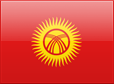 |
| History | |
| A Central Asian country of incredible natural beauty and proud nomadic traditions, most of the territory of the present-day Kyrgyz Republic was formally annexed to the Russian Empire in 1876. The Kyrgyz staged a major revolt against the Tsarist Empire in 1916 in which almost one-sixth of the Kyrgyz population was killed. The Kyrgyz Republic became a Soviet republic in 1936 and achieved independence in 1991 when the USSR dissolved. Nationwide demonstrations in 2005 and 2010 resulted in the ouster of the country’s first two presidents, Askar AKAEV and Kurmanbek BAKIEV. Interim President Roza OTUNBAEVA led a transitional government and following a nation-wide election, President Almazbek ATAMBAEV was sworn in as president in 2011. In 2017, ATAMBAEV became the first Kyrgyz president to step down after serving one full six-year term as required in the country’s constitution. Former prime minister and ruling Social-Democratic Party of Kyrgyzstan member Sooronbai JEENBEKOV replaced him after winning an October 2017 presidential election that was the most competitive in the country’s history, although international and local election observers noted cases of vote buying and abuse of public resources. The president holds substantial powers as head of state even though the prime minister oversees the Kyrgyz Government and selects most cabinet members. The president represents the country internationally and can sign or veto laws, call for new elections, and nominate Supreme Court judges, cabinet members for posts related to security or defense, and numerous other high-level positions. Continuing concerns for the Kyrgyz Republic include the trajectory of democratization, endemic corruption, a history of tense, and at times violent, interethnic relations, border security vulnerabilities, and potential terrorist threats. |

|  |
| |
| Geography | |
| |
| Location: | Central Asia, west of China, south of Kazakhstan |
| Geographic coordinates: | 41 00 N, 75 00 E |
| Area: | total: 199,951 sq km land: 191,801 sq km water: 8,150 sq km Size comparison: slightly smaller than South Dakota |
| Land Boundaries: | total: 4,573 km border countries (4): China 1063 km, Kazakhstan 1212 km, Tajikistan 984 km, Uzbekistan 1314 km |
| Coastline: | 0 km (landlocked) |
| Maritime claims: | none (landlocked) |
| Climate: | dry continental to polar in high Tien Shan Mountains; subtropical in southwest (Fergana Valley); temperate in northern foothill zone |
| Terrain: | peaks of the Tien Shan mountain range and associated valleys and basins encompass the entire country |
| Natural resources: | abundant hydropower; gold, rare earth metals; locally exploitable coal, oil, and natural gas; other deposits of nepheline, mercury, bismuth, lead, and zinc |
| Land use: | agricultural land: 55.4% (2011 est.) arable land: 6.7% (2011 est.) permanent crops: 0.4% (2011 est.) permanent pasture: 48.3% (2011 est.) forest: 5.1% (2011 est.) other: 39.5% (2011 est.) |
| Irrigated land: | 10,233 sq km (2012) |
| Natural hazards: | major flooding during snow melt; prone to earthquakes |
| Current Environment Issues: | water pollution; many people get their water directly from contaminated streams and wells; as a result, water-borne diseases are prevalent; increasing soil salinity from faulty irrigation practices; air pollution due to rapid increase of traffic |
| International Environment Agreements: | party to: Air Pollution, Biodiversity, Climate Change, Climate Change-Kyoto Protocol, Desertification, Hazardous Wastes, Ozone Layer Protection, Wetlands signed, but not ratified: none of the selected agreements |
| ^Back to Top | |
| People | |
| |
| Nationality: | noun: Kyrgyzstani(s) adjective: Kyrgyzstani |
| Ethnic groups: | Kyrgyz 73.5%, Uzbek 14.7%, Russian 5.5%, Dungan 1.1%, other 5.2% (includes Uyghur, Tajik, Turk, Kazakh, Tatar, Ukrainian, Korean, German) (2019 est.) |
| Languages: | Kyrgyz (official) 71.4%, Uzbek 14.4%, Russian (official) 9%, other 5.2% (2009 est.) |
| Religions: | Muslim 90% (majority Sunni), Christian 7% (Russian Orthodox 3%), other 3% (includes Jewish, Buddhist, Baha'i) (2017 est.) |
| Population: | 5,849,296 (July 2018 est.) |
| Age structure: | 0-14 years: 30.4% (male 912,455 /female 865,910) 15-24 years: 16.28% (male 483,799 /female 468,653) 25-54 years: 39.94% (male 1,146,221 /female 1,189,763) 55-64 years: 7.95% (male 202,754 /female 262,412) 65 years and over: 5.43% (male 121,221 /female 196,108) (2018 est.) |
| Dependency ratios: | total dependency ratio: 54.7 (2015 est.) youth dependency ratio: 48.1 (2015 est.) elderly dependency ratio: 6.6 (2015 est.) potential support ratio: 15.1 (2015 est.) |
| Median age: | total: 26.8 years male: 25.7 years female: 27.9 years (2018 est.) |
| Population growth rate: | 1.02% (2018 est.) |
| Birth rate: | 21.6 births/1,000 population (2018 est.) |
| Death rate: | 6.4 deaths/1,000 population (2018 est.) |
| Net migration rate: | -5.1 migrant(s)/1,000 population (2018 est.) |
| Urbanization: | urban population: 36.4% of total population (2018) rate of urbanization: 2.03% annual rate of change (2015-20 est.) |
| Major urban areas - population: | 996,000 BISHKEK (capital) (2018) |
| Sex ratio: | at birth: 1.07 male(s)/female 0-14 years: 1.05 male(s)/female 15-24 years: 1.03 male(s)/female 25-54 years: 0.96 male(s)/female 55-64 years: 0.77 male(s)/female 65 years and over: 0.62 male(s)/female total population: 0.96 male(s)/female (2018 est.) Mother's mean age at first birth: 23.2 years (2014 est.) |
| Maternal mortality rate: | 76 deaths/100,000 live births (2015 est.) |
| Infant mortality rate: | total: 25 deaths/1,000 live births male: 29 deaths/1,000 live births female: 20.7 deaths/1,000 live births (2018 est.) |
| Life expectancy at birth: | total population: 71.2 years male: 67.1 years female: 75.6 years (2018 est.) |
| Total fertility rate: | 2.59 children born/woman (2018 est.) |
| Contraceptive prevalence rate: | 42% (2014) |
| Physicians density: | 1.88 physicians/1,000 population (2014) |
| Hospital bed density: | 4.5 beds/1,000 population (2013) |
| Drinking water source: | improved: urban: 96.7% of population rural: 86.2% of population total: 90% of population unimproved: urban: 3.3% of population rural: 13.8% of population total: 10% of population (2015 est.) |
| Sanitation facility access: | improved: urban: 89.1% of population (2015 est.) rural: 95.6% of population (2015 est.) total: 93.3% of population (2015 est.) unimproved: urban: 10.9% of population (2015 est.) rural: 4.4% of population (2015 est.) total: 6.7% of population (2015 est.) |
| HIV/AIDS - adult prevalence rate: | 0.2% (2017 est.) |
| HIV/AIDS - people living with HIV/AIDS: | 7,600 (2017 est.) |
| HIV/AIDS - deaths: | <500 (2017 est.) |
| Obesity - adult prevalence rate: | 16.6% (2016) |
| Children under the age of 5 years underweight: | 2.8% (2014) |
| Education expenditures: | 7.2% of GDP (2017) |
| Literacy: | definition: age 15 and over can read and write (2015 est.) total population: 99.5% male: 99.6% female: 99.4% (2015 est.) |
| School life expectancy (primary to tertiary education): | total: 13 years male: 13 years female: 14 years (2017) Unemployment, youth ages 15-24: total: 14.8% male: 11.7% female: 21% (2017 est.) |
| ^Back to Top | |
| Government | |
| |
| Country name: | conventional long form: Kyrgyz Republic conventional short form: Kyrgyzstan local long form: Kyrgyz Respublikasy local short form: Kyrgyzstan former: Kirghiz Soviet Socialist Republic etymology: a combination of the Turkic words "kyrg" (forty) and "-yz" (tribes) with the Persian suffix "-stan" (country) creating the meaning "Land of the Forty Tribes"; the name refers to the forty clans united by the legendary Kyrgyz hero, MANAS |
| Government type: | parliamentary republic |
| Capital: | name: Bishkek geographic coordinates: 42 52 N, 74 36 E time difference: UTC+6 (11 hours ahead of Washington, DC, during Standard Time) etymology: founded in 1868 as a Russian settlement on the site of a previously destroyed fortress named "Pishpek"; the name was retained and overtime became "Bishkek" |
| Administrative divisions: | 7 provinces (oblustar, singular - oblus) and 2 cities* (shaarlar, singular - shaar); Batken Oblusu, Bishkek Shaary*, Chuy Oblusu (Bishkek), Jalal-Abad Oblusu, Naryn Oblusu, Osh Oblusu, Osh Shaary*, Talas Oblusu, Ysyk-Kol Oblusu (Karakol) note: administrative divisions have the same names as their administrative centers (exceptions have the administrative center name following in parentheses) |
| Independence: | 31 August 1991 (from the Soviet Union) |
| National holiday: | Independence Day, 31 August (1991) |
| Constitution: | history: previous 1993; latest adopted by referendum 27 June 2010, effective 2 July 2010; note - constitutional amendments that bolstered some presidential powers and transferred others from the president to the prime minister passed in a referendum in December 2016, effective December 2017 amendments: proposed as a draft law by the majority of the Supreme Council membership or by petition of 300,000 voters; passage requires at least two-thirds majority vote of the Council membership in each of at least three readings of the draft two months apart; the draft may be submitted to a referendum if approved by two-thirds of the Council membership; adoption requires the signature of the president; amended 2017 (2018) |
| Legal system: | civil law system, which includes features of French civil law and Russian Federation laws |
| Suffrage: | 18 years of age; universal |
| Executive branch: | chief of state: President Sooronbay JEENBEKOV (since 24 November 2017) head of government: Prime Minister Mukhammedkalyy ABYL-GAZIEV (since 20 April 2018); First Deputy Prime Minister Kubatbek BORONOV (since 20 April 2018); Deputy Prime Ministers Jenish RAZAKOV (since 20 April 2018), Altynay OMURBEKOVA (since 20 April 2018), Zamirbek ASKAROV (since 20 April 2018) cabinet: Cabinet of Ministers proposed by the prime minister, appointed by the president upon approval by the Supreme Council; defense and security committee chairs appointed by the president elections/appointments: president directly elected by absolute majority popular vote in 2 rounds if needed for a single 6-year term; election last held on 15 October 2017 (next to be held in October 2023); prime minister nominated by the majority party or majority coalition in the Supreme Council, appointed by the president upon approval by the Supreme Council election results: Sooronbay JEENBEKOV elected president in first round; percent of vote - Sooronbay JEENBEKOV (SDPK) 54.2%, Omurbek BABANOV (Respublika) 33.5%, Adakhan MADUMAROV (Butun Kyrgyzstan) 6.6%, Temir SARIYEV (Akshumar) 2.5%, other 3.2% |
| Legislative branch: | description: unicameral Supreme Council or Jogorku Kengesh (120 seats; parties directly elected in a single nationwide constituency by closed party-list proportional representation vote; members selected from party lists to serve 5-year terms) elections: last held on 4 October 2015 (next to be held in 2020) election results: percent of vote by party - SDPK 27.4%, Respublika-Ata-Jurt 20.1%, Kyrgyzstan Party 12.9%, Onuguu-Progress 9.3%, Bir Bol 8.5%, Ata-Meken 7.7%, other 14.1%; seats by party - SDPK 38, Respublika-Ata-Jurt 28, Kyrgyzstan Party 18, Onuguu-Progress 13, Bir Bol 12, Ata-Meken 11; composition - men 97, women 23, percent of women 19.2% |
| Judicial branch: | highest courts: Supreme Court (consists of 25 judges); Constitutional Chamber of the Supreme Court (consists of the chairperson, deputy chairperson, and 9 judges) judge selection and term of office: Supreme Court and Constitutional Court judges appointed by the Supreme Council on the recommendation of the president; Supreme Court judges serve for 10 years, Constitutional Court judges serve for 15 years; mandatory retirement at age 70 for judges of both courts subordinate courts: Higher Court of Arbitration; oblast (provincial) and city courts |
| Political parties and leaders: | Ata-Meken (Fatherland) [Almambet SHYKMAMATOV] Bir Bol (Stay United) [Altynbek SULAYMANOV] Kyrgyzstan Party [Almazbek BAATYRBEKOV] Onuguu-Progress (Development-Progress) [Bakyt TOROBAEV] Respublika-Ata-Jurt (Republic-Homeland) [Jyrgalbek TURUSKULOV] (parliamentary faction) Social-Democratic Party of Kyrgyzstan or SDPK [Almazbek ATAMBAEV, Isa OMURKULOV] |
| International organization participation: | ADB, CICA, CIS, CSTO, EAEC, EAEU, EAPC, EBRD, ECO, EITI (compliant country), FAO, GCTU, IAEA, IBRD, ICAO, ICC (NGOs), ICRM, IDA, IDB, IFAD, IFC, IFRCS, ILO, IMF, Interpol, IOC, IOM, IPU, ISO (correspondent), ITSO, ITU, MIGA, NAM (observer), OIC, OPCW, OSCE, PCA, PFP, SCO, UN, UNAMID, UNCTAD, UNESCO, UNIDO, UNISFA, UNMIL, UNMISS, UNWTO, UPU, WCO, WFTU (NGOs), WHO, WIPO, WMO, WTO |
| National symbol(s): | white falcon; national colors: red, yellow |
| National anthem: | name: "Kyrgyz Respublikasynyn Mamlekettik Gimni" (National Anthem of the Kyrgyz Republic) lyrics/music: Djamil SADYKOV and Eshmambet KULUEV/Nasyr DAVLESOV and Kalyi MOLDOBASANOV note: adopted 1992 |
| Diplomatic representation in the US: | chief of mission: Ambassador Bolot I. OTUNBAEV (since 8 April 2018) chancery: 2360 Massachusetts Ave. NW, Washington, DC 20008 telephone: [1] (202) 449-9822 FAX: [1] (202) 449-8275 honorary consulate(s): Maple Valley (WA) |
| Diplomatic representation from the US: | chief of mission: Ambassador Donald LU (since 18 September 2018) embassy: 171 Prospect Mira, Bishkek 720016 mailing address: use embassy street address telephone: [996] (312) 597-000 FAX: [996] (312) 597-744 |
| ^Back to Top | |
| Economy | |
Kyrgyzstan is a landlocked, mountainous, lower middle income country with an economy dominated by minerals extraction, agriculture, and reliance on remittances from citizens working abroad. Cotton, wool, and meat are the main agricultural products, although only cotton is exported in any quantity. Other exports include gold, mercury, uranium, natural gas, and - in some years - electricity. The country has sought to attract foreign investment to expand its export base, including construction of hydroelectric dams, but a difficult investment climate and an ongoing legal battle with a Canadian firm over the joint ownership structure of the nation’s largest gold mine deter potential investors. Remittances from Kyrgyz migrant workers, predominantly in Russia and Kazakhstan, are equivalent to more than one-quarter of Kyrgyzstan’s GDP. Following independence, Kyrgyzstan rapidly implemented market reforms, such as improving the regulatory system and instituting land reform. In 1998, Kyrgyzstan was the first Commonwealth of Independent States country to be accepted into the World Trade Organization. The government has privatized much of its ownership shares in public enterprises. Despite these reforms, the country suffered a severe drop in production in the early 1990s and has again faced slow growth in recent years as the global financial crisis and declining oil prices have dampened economies across Central Asia. The Kyrgyz government remains dependent on foreign donor support to finance its annual budget deficit of approximately 3 to 5% of GDP. Kyrgyz leaders hope the country’s August 2015 accession to the Eurasian Economic Union (EAEU) will bolster trade and investment, but slowing economies in Russia and China and low commodity prices continue to hamper economic growth. Large-scale trade and investment pledged by Kyrgyz leaders has been slow to develop. Many Kyrgyz entrepreneurs and politicians complain that non-tariff measures imposed by other EAEU member states are hurting certain sectors of the Kyrgyz economy, such as meat and dairy production, in which they have comparative advantage. Since acceding to the EAEU, the Kyrgyz Republic has continued harmonizing its laws and regulations to meet EAEU standards, though many local entrepreneurs believe this process as disjointed and incomplete. Kyrgyzstan’s economic development continues to be hampered by corruption, lack of administrative transparency, lack of diversity in domestic industries, and difficulty attracting foreign aid and investment. | |
| GDP (purchasing power parity): | $23.15 billion (2017 est.) $22.14 billion (2016 est.) $21.22 billion (2015 est.) note: data are in 2017 dollars |
| GDP (official exchange rate): | $7.565 billion (2017 est.) |
| GDP - real growth rate: | 4.6% (2017 est.) 4.3% (2016 est.) 3.9% (2015 est.) |
| GDP - per capita (PPP): | $3,700 (2017 est.) $3,600 (2016 est.) $3,500 (2015 est.) note: data are in 2017 dollars |
| Gross national saving: | 27.3% of GDP (2017 est.) 20.1% of GDP (2016 est.) 18.3% of GDP (2015 est.) GDP - composition, by end use: household consumption: 85.4% (2017 est.) government consumption: 18.9% (2017 est.) investment in fixed capital: 33.2% (2017 est.) investment in inventories: 1.8% (2017 est.) exports of goods and services: 39.7% (2017 est.) imports of goods and services: -79% (2017 est.) GDP - composition, by sector of origin: agriculture: 14.6% (2017 est.) industry: 31.2% (2017 est.) services: 54.2% (2017 est.) |
| Agriculture - products: | cotton, potatoes, vegetables, grapes, fruits and berries; sheep, goats, cattle, wool |
| Industries: | small machinery, textiles, food processing, cement, shoes, lumber, refrigerators, furniture, electric motors, gold, rare earth metals |
| Industrial production growth rate: | 10.9% (2017 est.) |
| Labor force: | 2.841 million (2017 est.) |
| Labor force - by occupation: | agriculture: 48% industry: 12.5% services: 39.5% (2005 est.) |
| Unemployment rate: | 7.1% (2017 est.) 7.2% (2016 est.) |
| Population below poverty line: | 32.1% (2015 est.) |
| Household income or consumption by percentage share: | lowest 10%: 4.4% highest 10%: 22.9% (2014 est.) |
| Distribution of family income - Gini index: | 33.4 (2007) 29 (2001) |
| Budget: | revenues: 2.169 billion (2017 est.) expenditures: 2.409 billion (2017 est.) |
| Taxes and other revenues: | 28.7% (of GDP) (2017 est.) Budget surplus (+) or deficit (-): -3.2% (of GDP) (2017 est.) |
| Public debt: | 56% of GDP (2017 est.) 55.9% of GDP (2016 est.) |
| Fiscal year: | calendar year |
| Inflation rate (consumer prices): | 3.2% (2017 est.) 0.4% (2016 est.) |
| Current account balance: | -$306 million (2017 est.) -$792 million (2016 est.) |
| Exports: | $1.84 billion (2017 est.) $1.544 billion (2016 est.) |
| Exports - commodities: | gold, cotton, wool, garments, meat; mercury, uranium, electricity; machinery; shoes |
| Exports - partners: | Switzerland 59.1%, Uzbekistan 9.4%, Kazakhstan 5.1%, Russia 4.9%, UK 4% (2017) |
| Imports: | $4.187 billion (2017 est.) $3.709 billion (2016 est.) |
| Imports - commodities: | oil and gas, machinery and equipment, chemicals, foodstuffs |
| Imports - partners: | China 32.6%, Russia 24.8%, Kazakhstan 16.4%, Turkey 4.8%, US 4.2% (2017) |
| Reserves of foreign exchange and gold: | $2.177 billion (31 December 2017 est.) $1.97 billion (31 December 2016 est.) |
| Debt - external: | $8.164 billion (31 December 2017 est.) $8.182 billion (31 December 2016 est.) |
| Stock of direct foreign investment - at home: | $6.003 billion (31 December 2017 est.) $5.21 billion (31 December 2016 est.) |
| Stock of direct foreign investment - abroad: | $709.3 million (31 December 2017 est.) $655.5 million (31 December 2016 est.) |
| Market value of publicly traded shares: | $165 million (31 December 2012 est.) $165 million (31 December 2011 est.) $79 million (31 December 2010 est.) |
| Exchange rates: | soms (KGS) per US dollar - 68.35 (2017 est.) 69.914 (2016 est.) 69.914 (2015 est.) 64.462 (2014 est.) 53.654 (2013 est.) |
| ^Back to Top | |
| Energy | |
| |
| Electricity - production: | 13.04 billion kWh (2016 est.) |
| Electricity - consumption: | 10.52 billion kWh (2016 est.) |
| Electricity - exports: | 184 million kWh (2015 est.) |
| Electricity - imports: | 331 million kWh (2016 est.) |
| Electricity - installed generating capacity: | 4.046 million kW (2016 est.) |
| Electricity - from fossil fuels: | 24% of total installed capacity (2016 est.) |
| Electricity - from nuclear fuels: | 0% of total installed capacity (2017 est.) |
| Electricity - from hydroelectric plants: | 76% of total installed capacity (2017 est.) |
| Electricity - from other renewable sources: | 0% of total installed capacity (2017 est.) |
| Crude oil - production: | 1,000 bbl/day (2017 est.) |
| Crude oil - exports: | 0 bbl/day (2015 est.) |
| Crude oil - imports: | 4,480 bbl/day (2015 est.) |
| Crude oil - proved reserves: | 40 million bbl (1 January 2018 est.) |
| Refined petroleum products - production: | 6,996 bbl/day (2015 est.) |
| Refined petroleum products - consumption: | 37,000 bbl/day (2016 est.) |
| Refined petroleum products - exports: | 2,290 bbl/day (2015 est.) |
| Refined petroleum products - imports: | 34,280 bbl/day (2015 est.) |
| Natural gas - production: | 28.32 million cu m (2017 est.) |
| Natural gas - consumption: | 186.9 million cu m (2017 est.) |
| Natural gas - exports: | 0 cu m (2017 est.) |
| Natural gas - imports: | 169.9 million cu m (2017 est.) |
| Natural gas - proved reserves: | 5.663 billion cu m (1 January 2018 est.) |
| Carbon dioxide emissions from consumption of energy: | 10.02 million Mt (2017 est.) |
| ^Back to Top | |
| Communications | |
| |
| Cellular Phones in use: | total subscriptions: 7,369,927 subscriptions per 100 inhabitants: 127 (2017 est.) |
| Telephone system: | general assessment: digital radio-relay stations, and fiber-optic links; low fixed-line and fixed-broadband penetration and low to moderate mobile broadband penetration; international connectivity continues to grow; 4 mobile networks in operation; 4G networks cover over 50% of the nation, eventually 5G networks will be available (2018) domestic: fixed-line penetration 6 per 100 persons remains low and concentrated in urban areas; mobile-cellular subscribership up to over 127 per 100 persons (2018) international: country code - 996; connections with other CIS countries by landline or microwave radio relay and with other countries by leased connections with Moscow international gateway switch and by satellite; satellite earth stations - 2 (1 Intersputnik, 1 Intelsat); connected internationally by the Trans-Asia-Europe (TAE) fiber-optic line (2016) |
| Broadcast media: | state-funded public TV broadcaster KTRK has nationwide coverage; also operates Ala-Too 24 news channel which broadcasts 24/7 and 4 other educational, cultural, and sports channels; ELTR and Channel 5 are state-owned stations with national reach; the switchover to digital TV in 2017 resulted in private TV station growth; approximately 20 stations are struggling to increase their own content up to 50% of airtime, as required by law, instead of rebroadcasting primarily programs from Russian channels or airing unlicensed movies and music; 3 Russian TV stations also broadcast; state-funded radio stations and about 10 significant private radio stations also exist (2019) |
| Internet country code: | .kg |
| Internet users: | total: 1,976,006 percent of population: 34.5% (July 2016 est.) |
| ^Back to Top | |
| Transportation | |
| |
| Airports: | 28 (2013) |
| Airports (paved runways): | total 18 (2017) over 3,047 m: 1 (2017) 2,438 to 3,047 m: 3 (2017) 1,524 to 2,437 m: 11 (2017) under 914 m: 3 (2017) |
| Airports (unpaved runways): | total 10 (2013) 1,524 to 2,437 m: 1 (2013) 914 to 1,523 m: 1 (2013) under 914 m: 8 (2013) |
| Pipelines: | 3566 km gas (2018), 16 km oil (2013) |
| Railways: | total 424 km (2018) broad gauge: 424 km 1.520-m gauge (2018) |
| Roadways: | total 34,000 km (2018) |
| Waterways: | 600 km (2010) |
| Ports and terminals: | lake port(s): Balykchy (Ysyk-Kol or Rybach'ye)(Lake Ysyk-Kol) |
| ^Back to Top | |
| Military | |
| |
| Military branches: | Land Forces, Air Defense Forces, National Guard, State Border Service, and State Committee on Defense Affairs (GKDO) (2017) |
| Military service age and obligation: | 18-27 years of age for compulsory or voluntary male military service in the Armed Forces or Interior Ministry; 1-year service obligation, with optional fee-based 3-year service in the call-up mobilization reserve; women may volunteer at age 19; 16-17 years of age for military cadets, who cannot take part in military operations (2013) |
| Military expenditures: | 3.15% of GDP (2016) 3.45% of GDP (2015) 3.38% of GDP (2014) 3.2% of GDP (2013) 3.21% of GDP (2012) |
| ^Back to Top | |
| Transnational Issues | |
| |
| Disputes - International: | disputes in Isfara Valley delay completion of delimitation with Tajikistan; delimitation of approximately 15% or 200 km of border with Uzbekistan is hampered by serious disputes over enclaves and other areas |
| Illicit drugs: | limited illicit cultivation of cannabis and opium poppy for CIS markets; limited government eradication of illicit crops; transit point for Southwest Asian narcotics bound for Russia and the rest of Europe; major consumer of opiates |
| ^Back to Top | |
«
Previous Country | Next Country » Back to Flag Counter OverviewSource: CIA - The World Factbook